publications
publications by categories in reversed chronological order. generated by jekyll-scholar.
2026
-
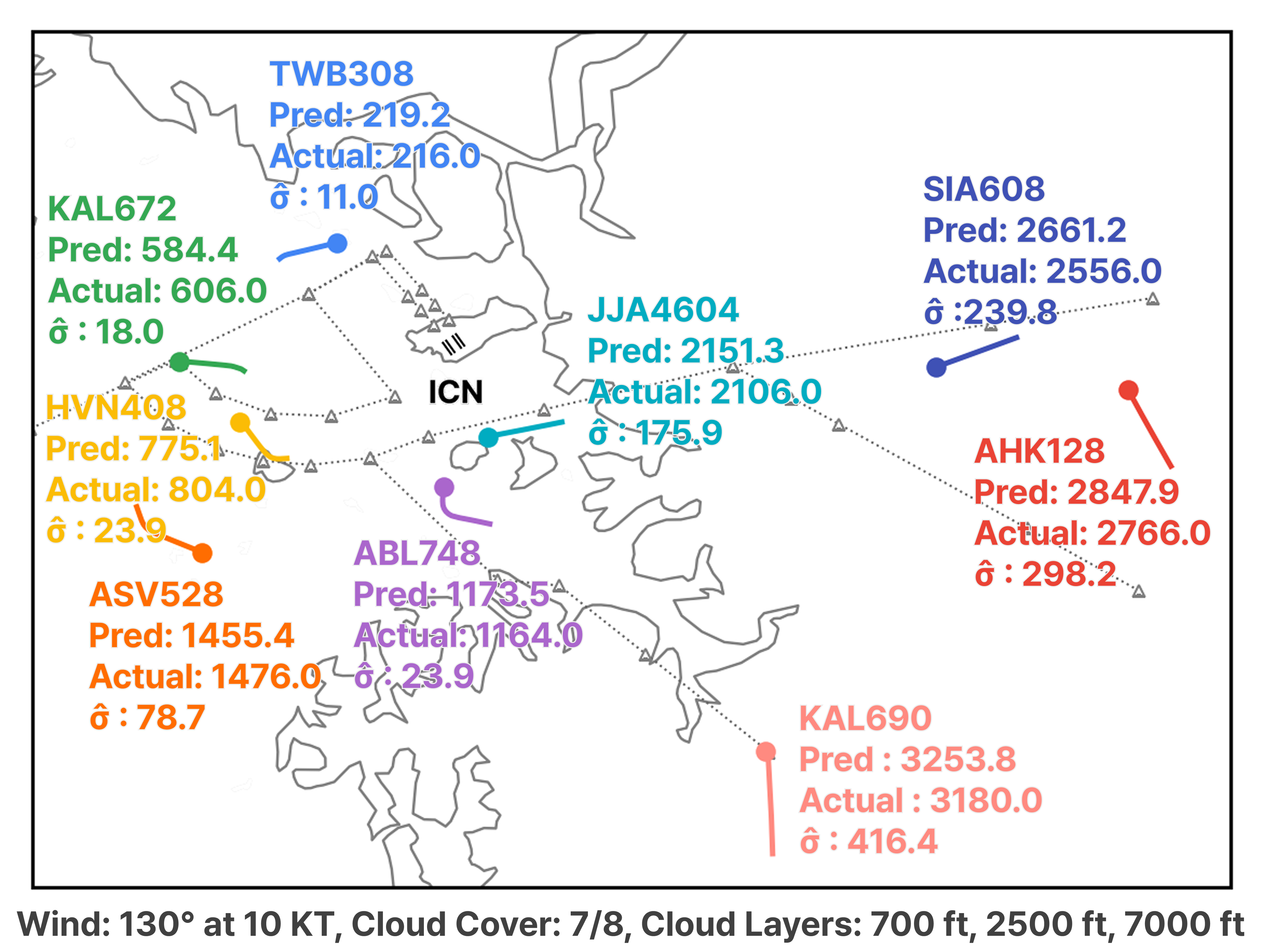 Probabilistic Multi-Agent Aircraft Landing Time PredictionKyungmin Kim, Seokbin Yoon, and Keumjin LeeAIAA SciTech, 2026
Accurate and reliable aircraft landing time prediction is essential for effective resource allocation in air traffic management. However, the inherent uncertainty in aircraft trajectories and traffic flows poses a significant challenge to both prediction models and their trustworthiness. It is therefore critical for models to provide not only point estimates but also uncertainty associated with those predictions. Furthermore, aircraft trajectories are frequently influenced by the presence of nearby aircraft through air traffic control interventions such as radar vectoring. As a result, landing time prediction models must also account for multi-agent interactions in the airspace. In this work, we propose a probabilistic multi-agent aircraft landing time prediction framework that models the landing times of multiple aircraft as distributions, explicitly capturing the inherent uncertainty. We evaluate our framework using an air traffic surveillance dataset collected from the terminal airspace of Incheon International Airport in South Korea. The results demonstrate that our model achieves higher prediction accuracy while also quantifying the associated uncertainty. In addition, we find that the model uncovers underlying patterns in air traffic control through its attention scores, thereby enhancing explainability.
2025
-
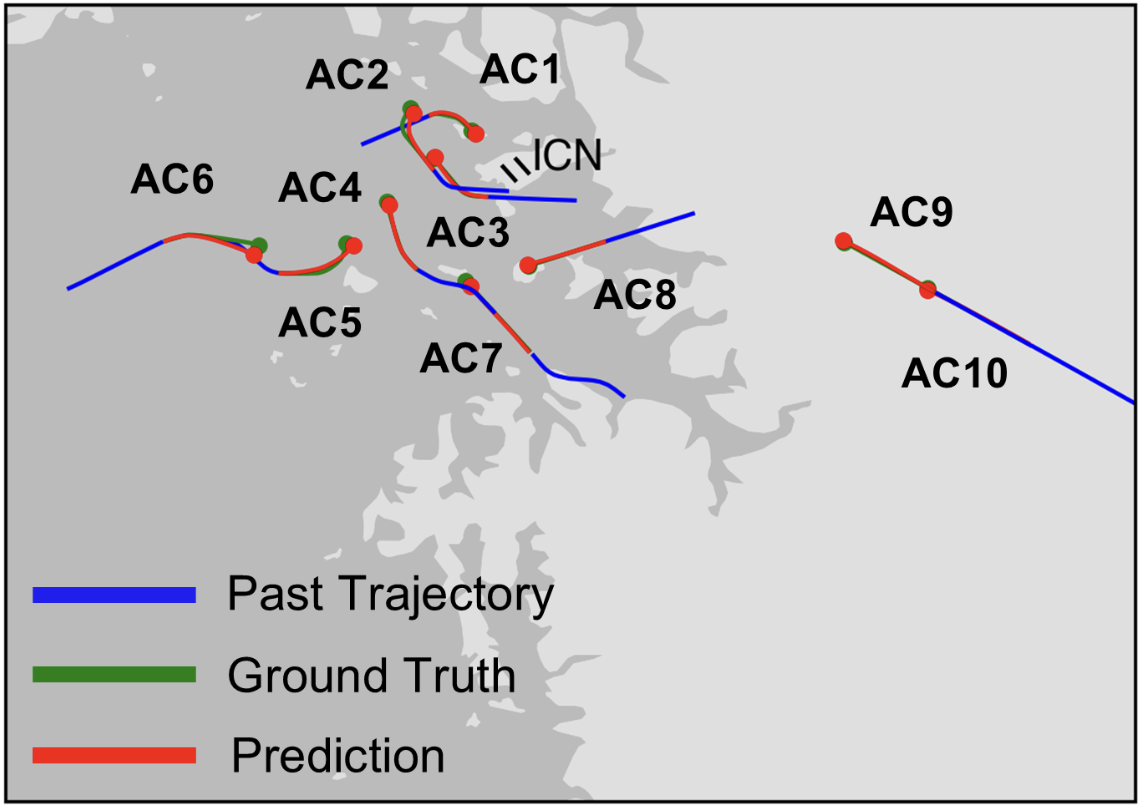 MAIFormer: Multi-Agent Inverted Transformer for Flight Trajectory PredictionSeokbin Yoon and Keumjin LeearXiv preprint arXiv:2509.21004, 2025
Flight trajectory prediction for multiple aircraft is essential and provides critical insights into how aircraft navigate within current air traffic flows. However, predicting multi-agent flight trajectories is inherently challenging. One of the major difficulties is modeling both the individual aircraft behaviors over time and the complex interactions between flights. Generating explainable prediction outcomes is also a challenge. Therefore, we propose a Multi-Agent Inverted Transformer, MAIFormer, as a novel neural architecture that predicts multi-agent flight trajectories. The proposed framework features two key attention modules: (i) masked multivariate attention, which captures spatio-temporal patterns of individual aircraft, and (ii) agent attention, which models the social patterns among multiple agents in complex air traffic scenes. We evaluated MAIFormer using a real-world automatic dependent surveillance-broadcast flight trajectory dataset from the terminal airspace of Incheon International Airport in South Korea. The experimental results show that MAIFormer achieves the best performance across multiple metrics and outperforms other methods. In addition, MAIFormer produces prediction outcomes that are interpretable from a human perspective, which improves both the transparency of the model and its practical utility in air traffic control.
-
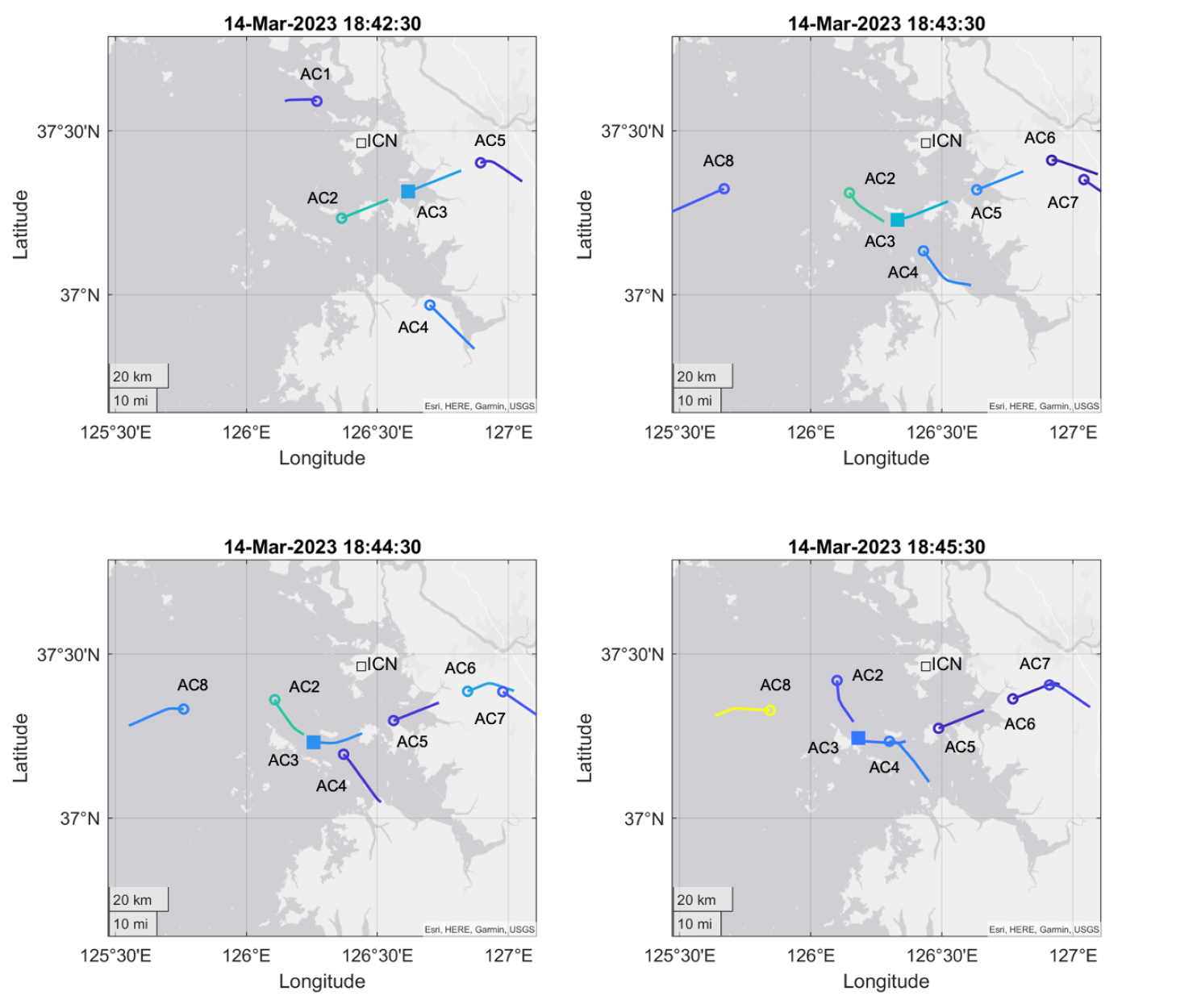 Learning to Explain Air Traffic SituationHong-ah Chai, Seokbin Yoon, and Keumjin LeeFirst US-Europe Air Transportation Research & Development Symposium, 2025
Understanding how air traffic controllers construct a mental ’picture’ of complex air traffic situations is crucial but remains a challenge due to the inherently intricate, high-dimensional interactions between aircraft, pilots, and controllers. Previous work on modeling the strategies of air traffic controllers and their mental image of traffic situations often centers on specific air traffic control tasks or pairwise interactions between aircraft, neglecting to capture the comprehensive dynamics of an air traffic situation. To address this issue, we propose a machine learning-based framework for explaining air traffic situations. Specifically, we employ a Transformer-based multi-agent trajectory model that encapsulates both the spatio-temporal movement of aircraft and social interaction between them. By deriving attention scores from the model, we can quantify the influence of individual aircraft on overall traffic dynamics. This provides explainable insights into how air traffic controllers perceive and understand the traffic situation. Trained on real-world air traffic surveillance data collected from the terminal airspace around Incheon International Airport in South Korea, our framework effectively explicates air traffic situations. This could potentially support and enhance the decision-making and situational awareness of air traffic controllers.
-
 Aircraft Trajectory Dataset Augmentation in Latent SpaceSeokbin Yoon and Keumjin LeeInternational Journal of Aeronautical and Space Sciences, 2025
Aircraft trajectory modeling plays a crucial role in air traffic management (ATM) and is important for various downstream tasks, including conflict detection and landing time prediction. Dataset augmentation by adding synthetically generated trajectory data is necessary to develop a more robust aircraft trajectory model and ensure that the trajectory dataset is sufficient and balanced. We propose a novel framework called ATRADA for aircraft trajectory dataset augmentation. In the proposed framework, a Transformer encoder learns the underlying patterns in the original trajectory dataset and converts each data point into a context vector in the learned latent space. The converted dataset is projected to reduced dimensions using principal component analysis (PCA), and a Gaussian mixture model (GMM) is applied to fit the probability distribution of the data points in the reduced-dimensional space. Finally, new samples are drawn from the fitted GMM, the dimension of the samples is reverted to the original dimension, and the samples are decoded with a multi-layer perceptron (MLP). Several experiments demonstrate that the framework effectively generates new, high-quality synthetic aircraft trajectory data, which were compared to the results of several baselines.
-
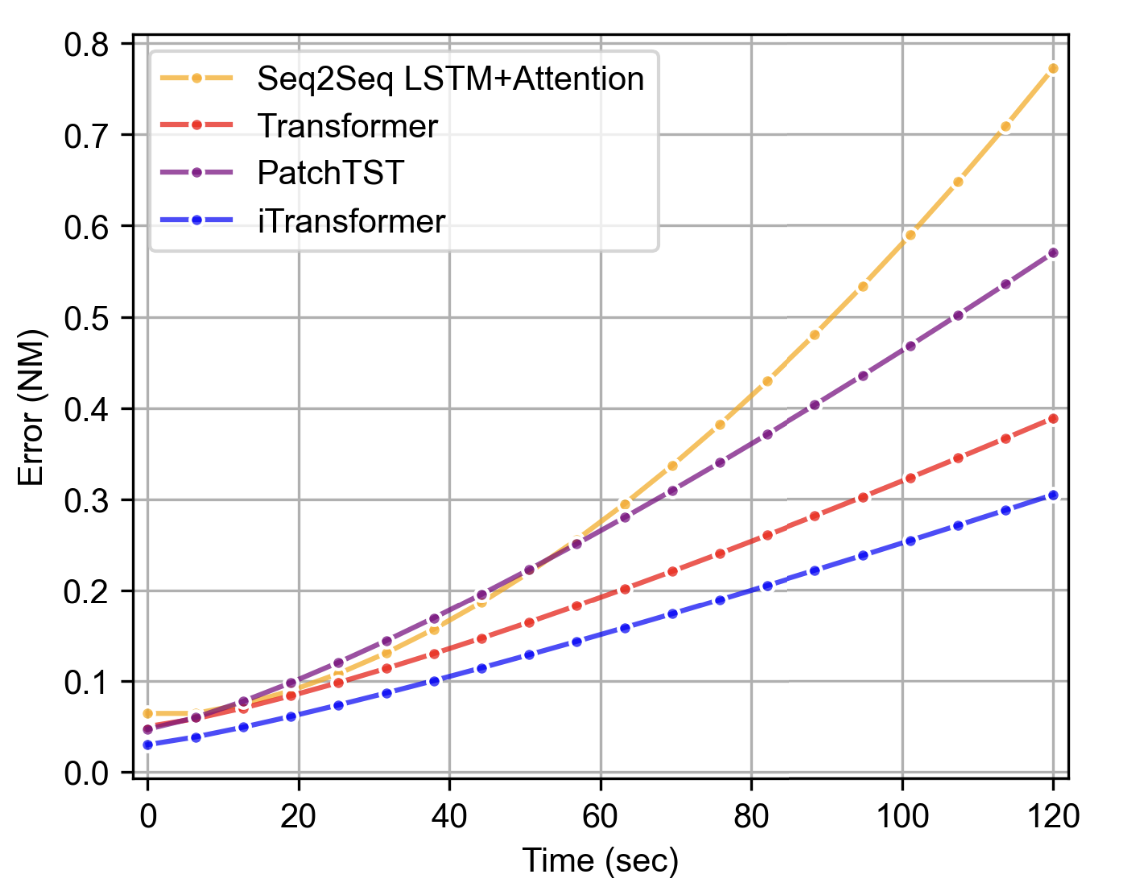 Aircraft Trajectory Prediction with Inverted TransformerSeokbin Yoon and Keumjin LeeIEEE Access, 2025
Aircraft trajectory prediction plays a crucial role in air traffic management and significantly enhances operational safety and efficiency. In this work, we propose an aircraft trajectory prediction model that utilizes an Inverted Transformer, which is a state-of-the-art model for time-series prediction. In a vanilla Transformer, temporal tokens containing the multivariate features are embedded for each time step, but in the Inverted Transformer, each series is embedded independently into variate tokens. The Inverted Transformer captures multivariate correlations in a trajectory sequence, resulting in improved prediction accuracy. The proposed model was validated with actual air traffic surveillance data from the terminal airspace of Incheon International Airport, South Korea. The experimental results demonstrate that the prediction accuracy from the proposed model is superior to those of other deep learning-based prediction models.
2024
- Urban Air Mobility Fleet Rebalancing with Real-Time Updates on Estimated Time of ArrivalJungu Kang, Seokbin Yoon, Keumjin Lee, and 1 more authorIn 2024 AIAA DATC/IEEE 43rd Digital Avionics Systems Conference (DASC), 2024
Rebalancing idle aircraft on the ground to other vertiports is essential for reducing passenger wait times at departure vertiports and minimizing the likelihood of airborne holding due to a lack of available pads and/or gates upon arrival. Rebalancing is also critical for efficient and safe Urban Air Mobility (UAM) operations. However, determining whether and when to rebalance can be challenging without real-time information on the status of arriving aircraft (e.g., estimated time of arrival), as improper rebalancing decisions can result in deadheads and congested vertiports. In that sense, rebalancing can be enriched with more up-to-date (or real-time) information, thus reducing airborne delays and mitigating potential adverse effects. In this context, this study proposes a rebalancing algorithm based on real-time prediction and updates of the estimated time of arrival (ETA). Experimental results show that airborne delays and variance of these are reduced with real-time updates on ETA compared to rebalancing without ETA updates (or using the ETA on the flight plan). Furthermore, real-time updates on ETA reduce the number of delayed flights and potentially unnecessary rebalancing (e.g., deadhead flights) by providing more accurate and up-to-date arrival times compared to rebalancing without ETA updates. Sensitivity analysis of the decision time for rebalancing is also conducted to validate the effectiveness of the proposed approach under various scenarios. The results of this study can contribute to tactical fleet management for on-demand UAM services by determining rebalancing based on real-time updates of flight information.
2023
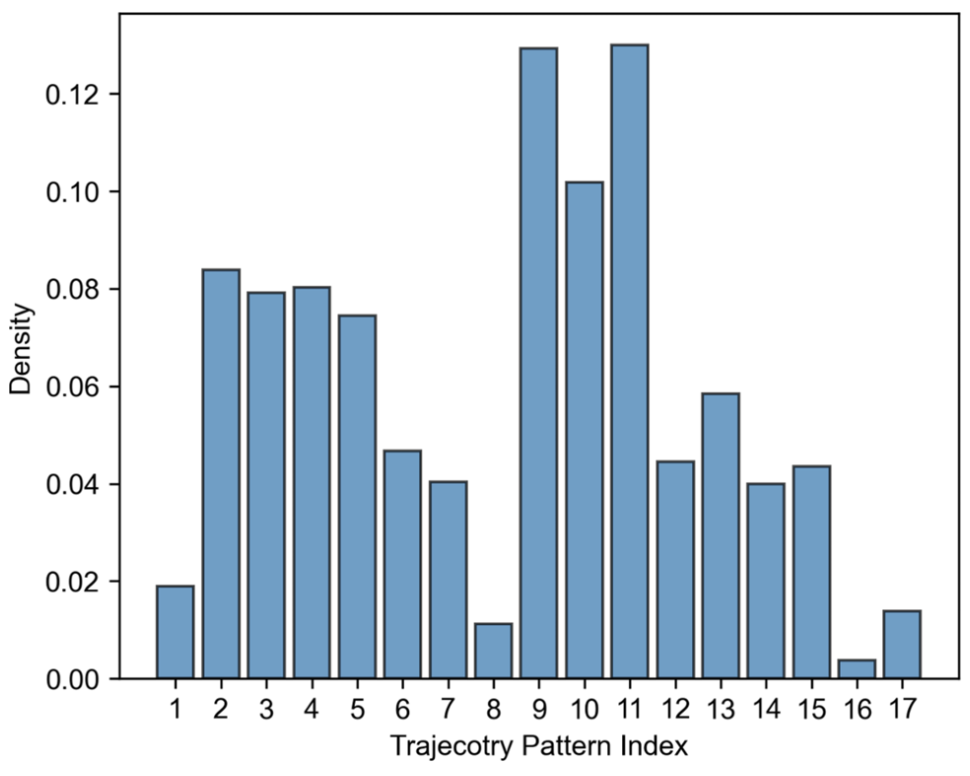
- Improving Aircraft Trajectory Prediction Accuracy with Over-sampling TechniqueSeokbin Yoon and Keumjin LeeIn 2023 IEEE/AIAA 42nd Digital Avionics Systems Conference (DASC), 2023
Trajectory prediction plays a critical role in air traffic management, enhancing the safety and efficiency of operations. Nevertheless, there is significant room for improvement in prediction accuracy. Efforts to improve prediction accuracy often involve the use of artificial intelligence (AI) and other data-driven techniques, but these methods frequently encounter a significant issue: the training dataset is often insufficient and imbalanced, leading to challenges in achieving accurate modeling. This can result in overfitting and a decrease in prediction accuracy. To mitigate these issues, we adopted a data-centric AI approach to trajectory prediction, with an assertion that a trajectory pattern represented by fewer data points should not be considered less significant for the prediction model. Given the potential safety implications of incorrect predictions in air traffic operations, it is important to develop a robust prediction model with consistent performance. Our approach involves identifying trajectory patterns by clustering with a Gaussian mixture model (GMM) and augmenting an imbalanced training data set using the synthetic minority over-sampling technique (SMOTE). A long short-term memory (LSTM) network was trained with the over-sampled training data set. The performance of the proposed method is demonstrated using real air traffic data and compared to a model trained with the original training dataset.
- Safety and Capacity Analysis Framework for Integrated UAM Operation in AirportsNaomi Hani Gray, Suyoung Shin, Seokbin Yoon, and 5 more authorsIn 2023 IEEE/AIAA 42nd Digital Avionics Systems Conference (DASC), 2023
This paper investigates a method for the safe integration of urban air mobility (UAM) into controlled airspace while also analyzing its impact on the capacity of conventional aircraft runways. The proposed method consists of two main steps: route design and runway capacity assessment. In the first step, the UAM route is designed to maintain safe distances from obstacles and conventional traffic around the airport. In the second step, the impact of the route designed in the first step on runway capacity is assessed. The proposed method was applied to a potential vertiport location at Incheon International Airport using real traffic and obstacle data. The results demonstrated that the proposed method could assist decision-makers in comprehending various safety factors that influence the feasibility of UAM operations.